
Septic · start here
Septic system basics for homeowners
If your house is not on a city sewer, everything that goes down a drain ends up in a septic system on your own lot. Knowing the parts — and what each one needs from you — is the difference between a system that lasts decades and an emergency pump-out on a holiday weekend.
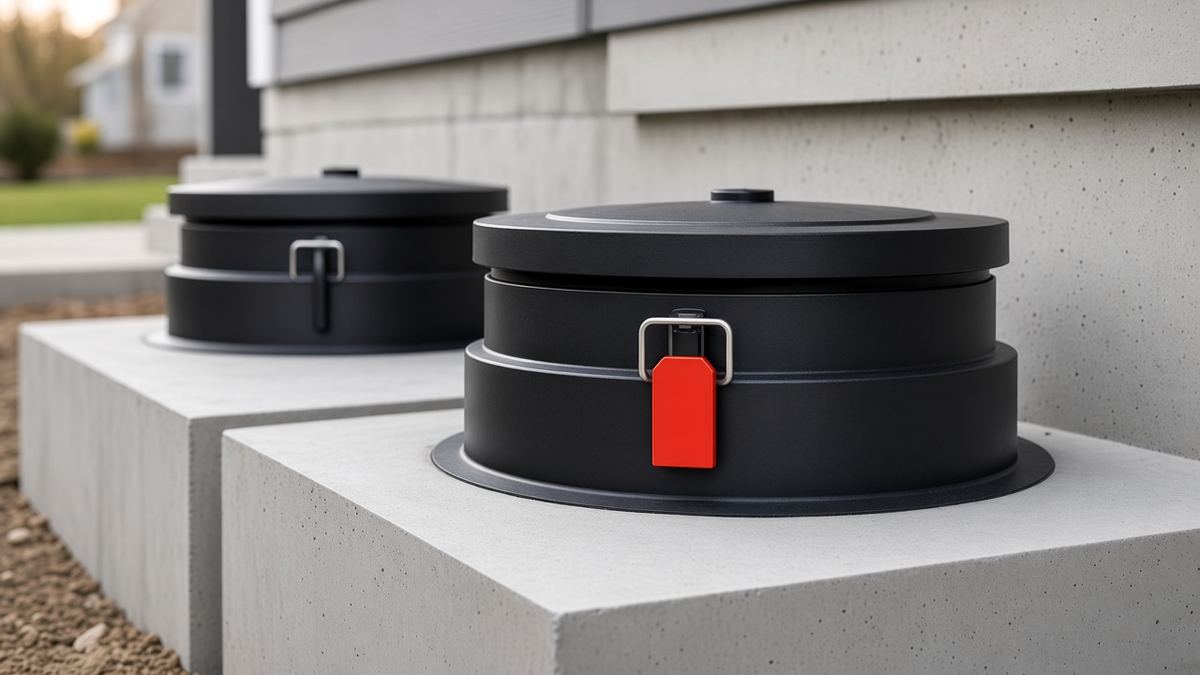
The parts, in the order water travels
| Part | What it does | What it needs from you |
|---|---|---|
| Building sewer | Carries all household drains from the house to the tank | Nothing but drain-safe waste; roots and wipes cause backups here |
| Septic tank | Holds wastewater long enough for solids to sink (sludge) and grease to float (scum) | Inspection and pumping before sludge and scum build too deep |
| Inlet and outlet baffles or tees | Slow incoming water and keep scum and solids from leaving the tank | The pumper checks them at each service; broken baffles push solids to the field |
| Effluent filter (many systems) | Screens small solids at the outlet before liquid leaves the tank | Periodic cleaning — see effluent filters |
| Distribution box or pump chamber | Splits the liquid between drain-field lines, or doses it with a pump on some systems | Level box, working pump and alarm where fitted |
| Drain field (leach field) | Perforated pipe or chambers in gravel or soil; the soil treats and absorbs the liquid | No driving, parking, building, or deep-rooted trees over it; no flooding with extra water |
Conventional vs alternative systems
Many homes have a conventional gravity system: tank to field, no moving parts. Lots with tight soils, high groundwater, or small yards often have an alternative system — a pump chamber, mound, sand filter, drip dispersal, or an aerobic treatment unit with a blower. Alternative systems have motors, floats, and alarms that need service, and many jurisdictions require a maintenance contract. Your local health department usually has the permit and as-built drawing on file — ask for it.
What “normal” looks like
- Drains run freely everywhere in the house, including the lowest fixture.
- No sewage smell in the yard, and no soggy, bright-green strips over the field in dry weather.
- The alarm panel, if you have one, is quiet and its test button works.
- Service records show regular inspection and pumping — see how often to pump.
Early warning signs
- Slow drains or gurgling in several fixtures at once, especially the lowest floor.
- Sewage odor outdoors, or wet spots and standing water over the tank or field.
- Backups into a basement floor drain or tub after laundry or heavy use.
- An alarm on a pump or aerobic system — treat it as a same-day call.
Cut water use right away and call a licensed septic professional. Running more water rarely fixes it, and additives do not replace pumping.
Your first-year checklist
- Get the system permit or as-built drawing from the county or health department.
- Locate and mark the tank lids; consider risers and secure lids so service does not mean digging.
- Schedule an inspection and pump-out if there is no recent record.
- Ask whether there is an effluent filter and how often to clean it.
- Share the what not to flush list with the household.
- Keep a simple log: date, company, sludge and scum depths, and notes.
When to call a pro
- Any backup, alarm, odor, or wet area over the system — a licensed septic pumper or inspector.
- Buying or selling a home on septic — a septic inspection with the tank pumped and baffles checked.
- Adding a bedroom, bathroom, or outbuilding — your health department may need to review system capacity.
Start with a licensed septic pumper or septic inspector for anything inside the tank, and your local health department for permits and system records. R.E. Merrill & Associates has handled industrial and municipal pumps and fluid systems since 1987 — contact R.E. Merrill & Associates.
Related across the site
- Sump pump basics — sump water should never be routed into a septic system
- Softener drain line and air gap — ask your installer where softener backwash should go on a septic lot
- Well water testing — many septic homes also have a private well
Sources
- U.S. EPA SepticSmart homeowner guidance.
- State and county onsite wastewater (septic) program guidance; check your local health department.
- Septic tank and effluent filter manufacturer literature.